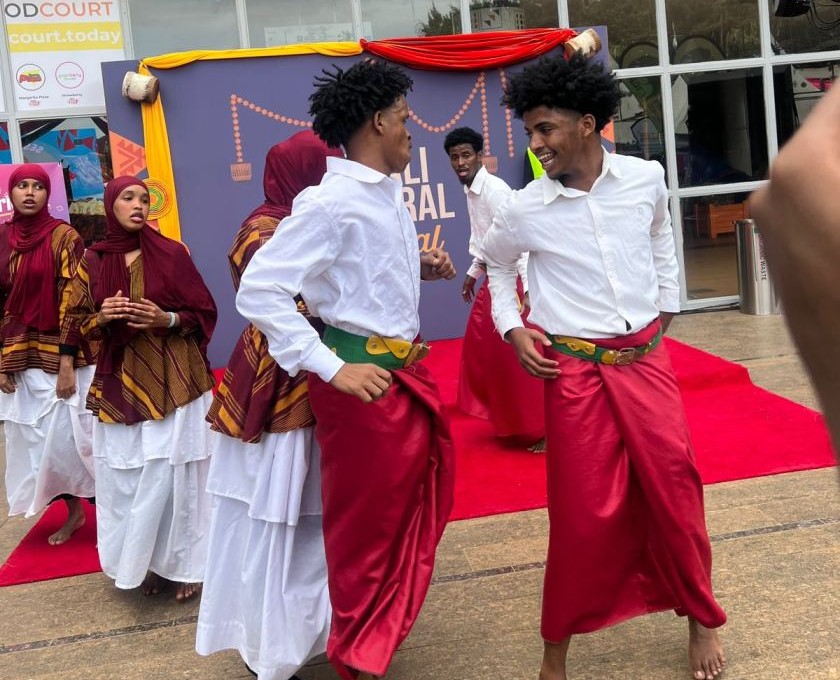
Kenya was lucky enough to be offered a vibrant insight into the essence of the Somali identity at the Somali Arts and Cultural Festival, which closed on November 30 at Nairobi's Two Rivers Mall.
Thousands gathered, with the aim to learn about the rich history, complex customs, and evolving narrative of the Somali, which took place from November 28 to 30, 2025.
The celebration brought culture, community and pride under one plate.
From food and attire to music to history to religion.
People from different cultures, just watching the Somali Daanto dancers and dances, put smiles on their faces, amazed at the same time, snapping the moment.
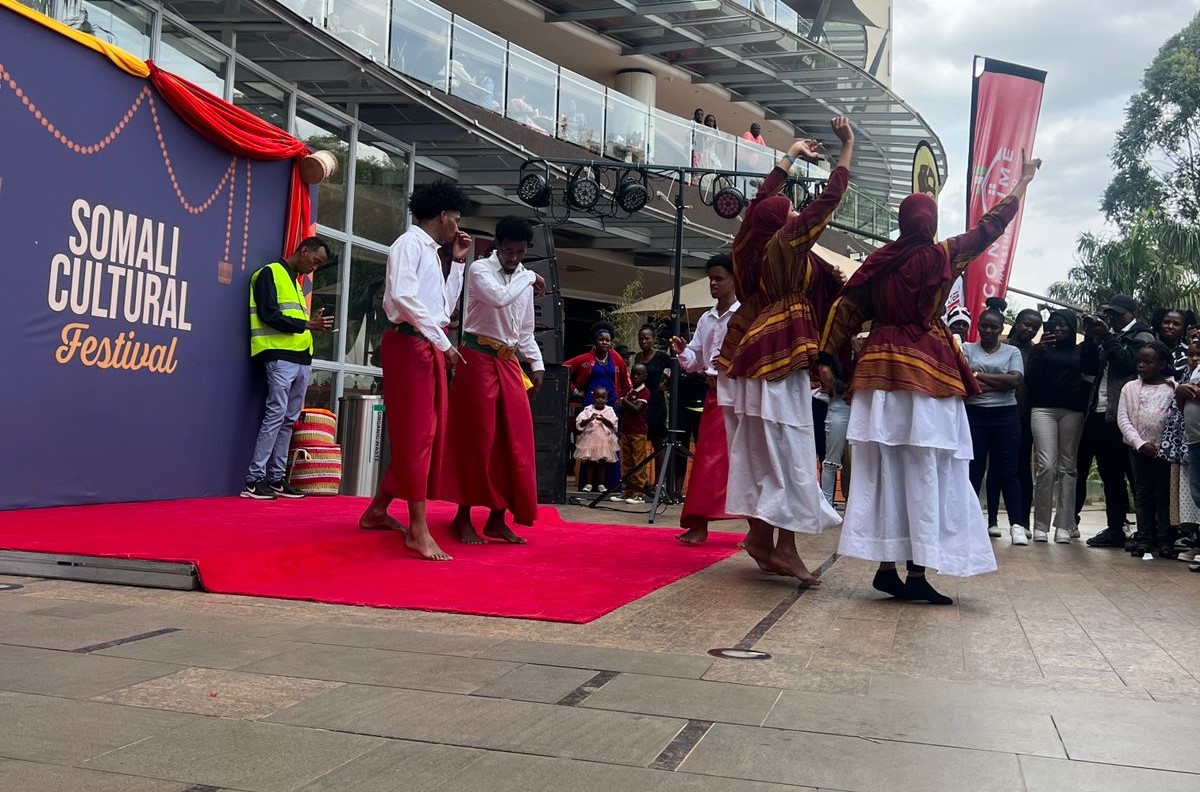 Dancers perform a Somali dance during the Somali Cultural Festival on November 29, 2025. PHOTO/Radio Generation
Among the chief guests was Somalia’s Ambassador to Kenya, Jabril Ibrahim Abdulle, who underscored the significance of celebrating culture, especially at a time when globalisation threatens to blur traditional identities.
He described Somalis as “business-minded, resilient and socially united,” highlighting their growing role in Kenya’s economic and political landscape.
Honestly, walking through the festival grounds felt like stepping into the cradle of Somalis.
The display of tents, ranging from Somali foods, canjeero (Somali pancake), cano geelo (camel milk), nyirinyiri (dried camel meat), boon, which is dry-roasted grain, halua and more amazed many people who, from that point, thought of the sweetness of culture.
Other sections showcased grass-thatched huts (aqal), traditional dirac dresses, beadwork and uunsi, a scented incense widely used to perfume clothes, homes, body and hair.
Many visitors left the mall with sporting hands decorated in vibrant floral patterns and intricate designs. Thanks to the henna artwork.
But beyond the colourful displays were powerful personal stories.
Somalis belong to a wide tapestry of clans and sub-clans.
These are the Degodia, Ajuran, Garre, Marehan, Hawiye, Dir, Isaaq, Ogaden and many others, each with its own history, dialectal variations and cultural nuances, yet all united by a shared Somali identity.
Throughout the Horn of Africa, these groups have shaped social organisation, leadership and community ties by tracing their ancestry through patrilineal clan families.
Due to centuries of pastoral migration, trade, intermarriage, and various regional influences, Somalis naturally have a variety of skin tones, ranging from light, olive, and caramel to deeper brown and rich dark complexions.
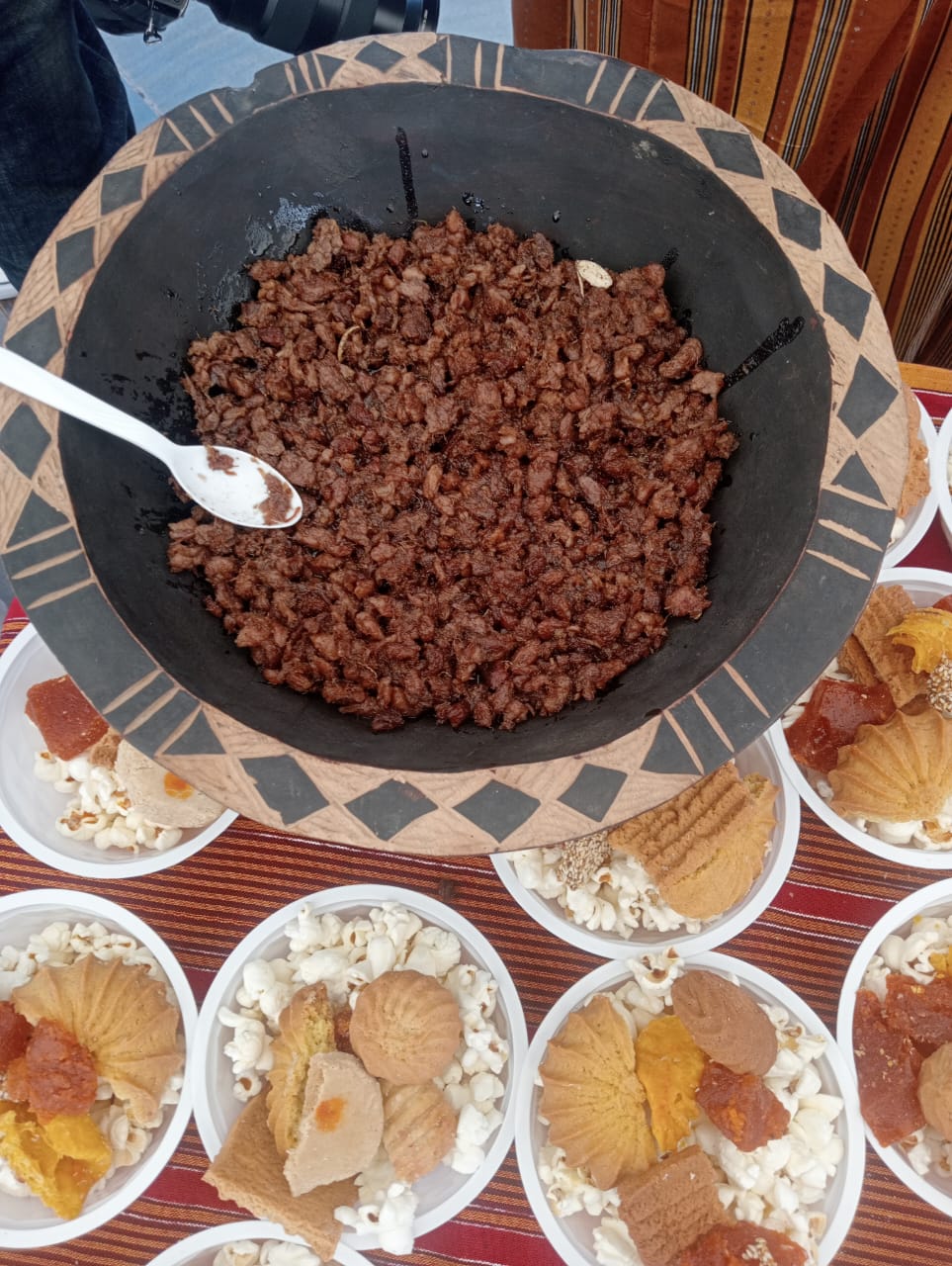 Somali cuisine during the Somali Cultural Festival on November 29, 2025. PHOTO/Radio Generation
This is a community that places great importance on prayer.
While enjoying themselves at the mall, they remained mindful of the five daily prayers, pausing their activities and heading straight to prayer whenever the time arrived.
One woman, draped in a flowing hijab, spoke passionately about why Somali women or rather Muslims, cover their hair and bodies. She views modesty as both spiritual and cultural.
“We follow the teachings of Prophet Muhammad, peace be upon Him,” she explained.
“He taught us to dress decently and cover our hair. On the Day of Judgement, failing to do so carries consequences. Even one strand of hair seen by a man who could marry you brings 7,000 sins. It shows how important modesty is.”
She went on to say that covering the body is an act of devotion and dignity.
“Why should a woman walk outside showing her thighs? That is for your husband, not the world. Even Mary, the mother of Jesus, always covered her head. We follow that example too.”
She further said that as Muslims, they have the five pillars of Islam, in which prayers five times a day are among them. The pillars she mentioned include: Shahada (faith), Salah (prayer), Zakat (charity), Sawm (fasting) and Hajj (Pilgrimage).
The festival also pulsed with the sounds of Daanto, a traditional Somali dance.
Performers shared its origin, Daanto was born among nomadic communities in northern Somalia as a celebratory dance performed after successful hunts, weddings and communal gatherings.
Its rhythmic stomping, synchronised movements and poetic chants reflect unity, joy, and courage, values deeply rooted in Somali life.
This year’s festival not only showcased Somali culture but also reaffirmed its resilience.
Economically, the Somali community are among East Africa’s most entrepreneurial people.
Socially, they maintain strong kinship systems, living and supporting each other in close-knit groups. Politically, their influence continues to grow in Kenya and across the Horn of Africa.
Story by Dahira Ahmed